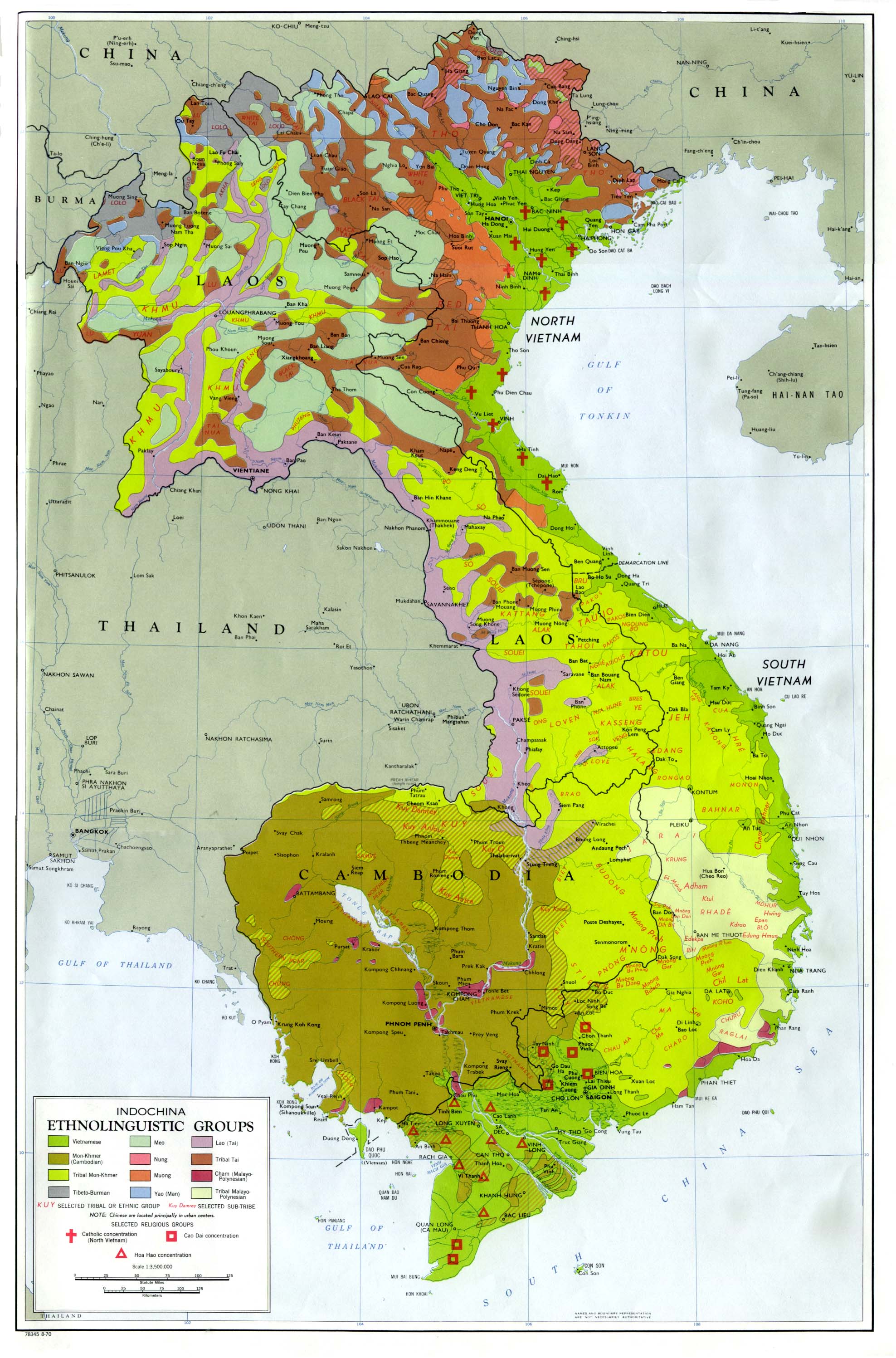

The Angkham, a tiny subgroup of the Phu Thai people numbering just under a few thousand, actively farm the lush Mekong lowlands of Savannakhet Province, Laos, especially in Vilabuly District. Their Tai-Kadai ancestors fled southern China between the 11th and 14th centuries, escaping Mongol hordes and chasing fertile river valleys. They rooted themselves in the mighty Lan Xang Kingdom, embraced Theravada Buddhism, and honed wet-rice techniques that still feed their families today. French colonial scribes first etched their name into records in the early 1900s as skilled irrigators along trade routes. From 1964 to 1973, American bombs shattered their villages; survivors hunkered in forests or fled across the Mekong. After the 1975 communist takeover, the government herded them into collectives, outlawed opium side-crops, and pushed assimilation into the broader Lao fold, but their small size preserved relative isolation. Now they face assimilation pressures as one of Laos' 49 officially recognized ethnicities, with limited documentation distinguishing them from broader Phu Thai. Today the Angkham plant rice, weave vibrant silk textiles, and speak Phu Thai—a dialect very close to Lao—while clinging to clan ties amid urban pull.
The Angkham lead an agrarian lifestyle in compact lowland villages of 50–200 households, built on stilts from bamboo and wood to withstand seasonal floods along the Mekong tributaries. Their economy revolves around wet-rice paddy farming using water buffalo for plowing, supplemented by fishing, vegetable gardens, and cash crops like tobacco or cotton. Women excel in silk weaving on traditional looms, producing intricate shoulder cloths with geometric patterns symbolizing protection and fertility, often traded in markets. Daily routines follow the agricultural calendar: planting during the monsoon (May–October), harvesting in the dry season, and communal feasts during festivals. Families are patrilineal and extended, with elders guiding decisions; youth increasingly migrate to urban Vientiane for wage labor, eroding traditional roles. Social life emphasizes hospitality, with sticky rice shared in bamboo baskets during meals, and evenings filled with folk singing accompanied by the bamboo mouth organ. Health challenges include dengue and poor sanitation, while literacy hovers around 60%, limited by remote schooling.
The Angkham predominantly adhere to Theravada Buddhism (70%), blended with animist folk practices (30%), with no Christian presence (0–0.1%). Temples (wats) serve as village hubs for merit-making rituals, where monks chant Pali scriptures during festivals like Bun That Luang (full moon offerings). Ancestor worship and spirit appeasement are integral, with phi (spirits) of rice fields, houses, and rivers requiring offerings of rice whiskey and incense to ensure prosperity—led by village elders rather than shamans. Key ceremonies include the soul-binding ritual, tying white strings around wrists for protection, and New Year water-splashing to wash away misfortune. This syncretic worldview fosters community harmony but attributes hardships like crop failure to offended spirits, resisting modern interventions. Buddhist ethics emphasize karma and non-attachment, yet animist taboos (e.g., avoiding certain days for planting) persist, reflecting deeper ties to Tai ancestral traditions.
Angkham farmers need hardy rice strains and hand pumps so Mekong surges no longer swallow their yields. Angkham mothers need bore wells and outpost clinics because dengue and dirty water claim too many infants. Angkham youth need homegrown trades like weaving co-ops so sons halt the trek to Thai sweatshops and kin stay woven tight. Angkham children need Phu Thai primers and folk tales in print so they claim their tongue before Lao swallows it whole. Angkham hamlets need daring Phu Thai speakers who embed, befriend, and boldly proclaim Christ amid the rice stalks.
Ask the father to dispatch the first Phu Thai-fluent disciples to their rice paddies this season.
Pray that the Holy Spirit will flood elders and phi-callers with night visions of the risen Savior.
Pray that the Lord will thaw officials' iron grip and fling wide gates for secret Bible circles and mercy works.
Pray for full Phu Thai audio Scriptures and Jesus parables etched in song.
Pray for a church planting movement among the Angkham this decade.
Pray against spiritual strongholds, that the Enemy's schemes would unravel as the Gospel takes root in this unreached lowland pocket.
Scripture Prayers for the Angkham in Laos.
Wikipedia. "Phu Thai Languagehttps://en.wikipedia.org/wiki/Phu_Thai_language.
Ethnologue. "Phu Thai: A Language of Laos." 2025 Edition. https://www.ethnologue.com/language/pht.
Facts and Details. "Ethnic Groups and Minorities in Laos." https://f
| Profile Source: Joshua Project |